Projects / AI Voice Agents
AI VOICE agents
I worked with the engineering team to create the voice AI agent framework:
Playbooks, knowledge bases, and coaching sessions are the three modes I designed for users to create and deploy their own voice agents.
Playbooks
Defining agent behavior
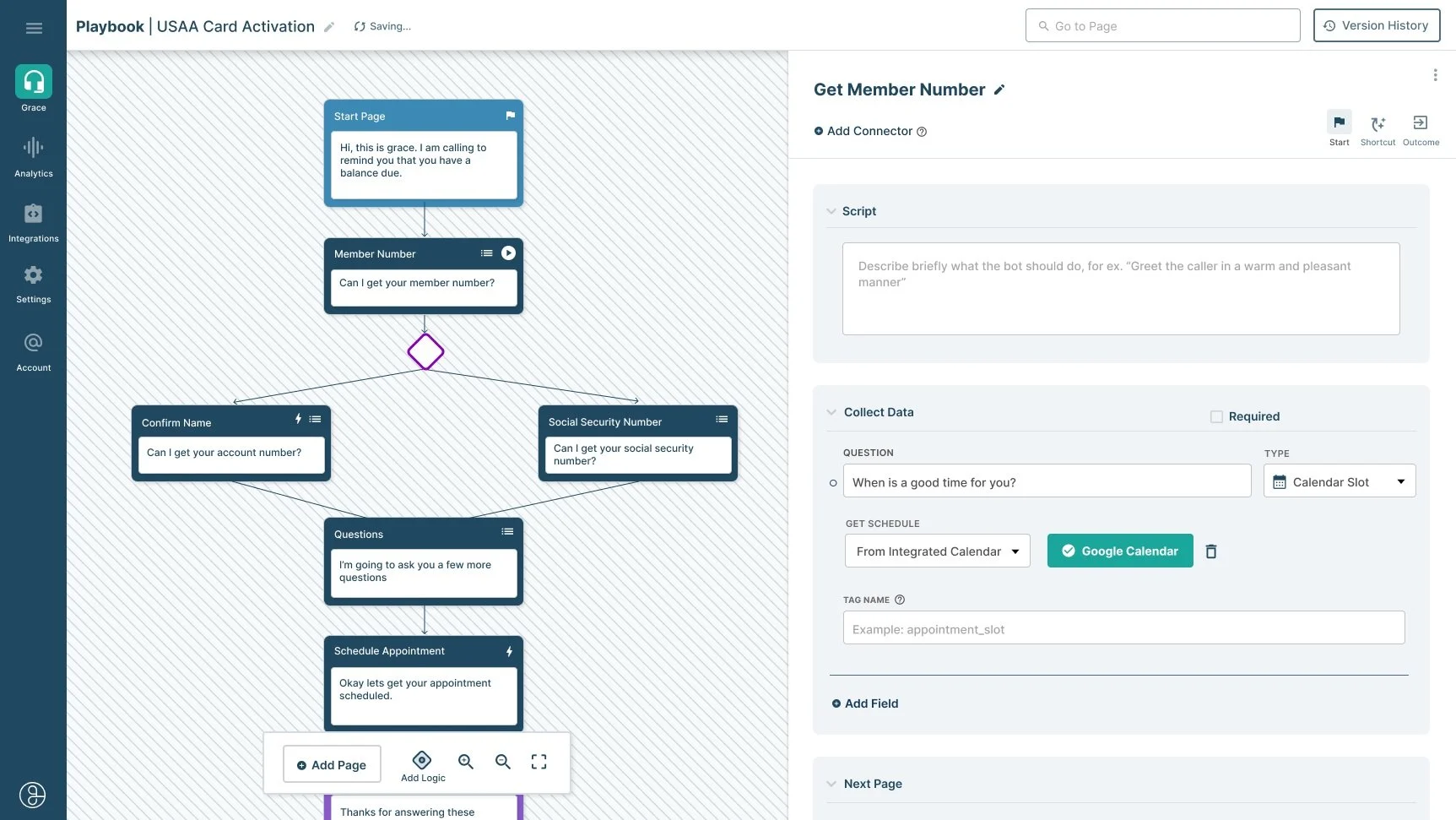
The Playbook defines an agent’s workflow, similar to a procedure a call center agent would follow.
Rather than designing a single linear setup flow, I chose to model agent behavior as a sequence of explicit steps. This made workflows inspectable and editable, allowing users to reason about agent behavior, debug issues, and update logic incrementally as requirements evolved.
Coaching Sessions
Training through conversations
Users coach their agent by speaking directly to it in test conversations. These sessions simulate real calls, allowing users to hear how the agent responds in context.
During a conversation, users can intervene and make corrections to both the information the agent uses and the actions or dialog it produces. This creates a tight feedback loop where agent behavior is shaped through example.
I intentionally designed this interaction to mirror how humans train other humans: by role-playing scenarios and giving feedback in the moment.
knowledge bases
Providing Context
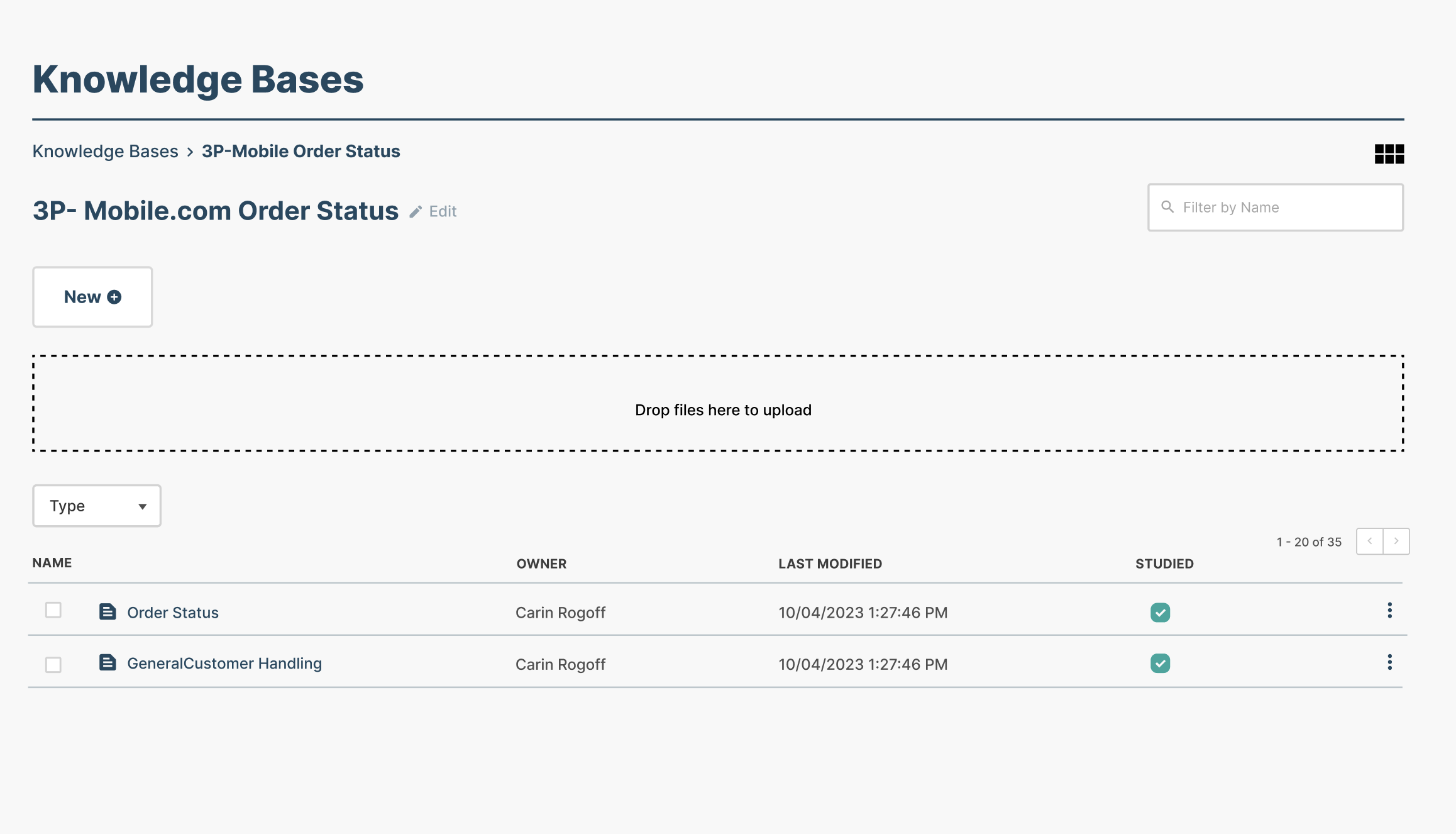
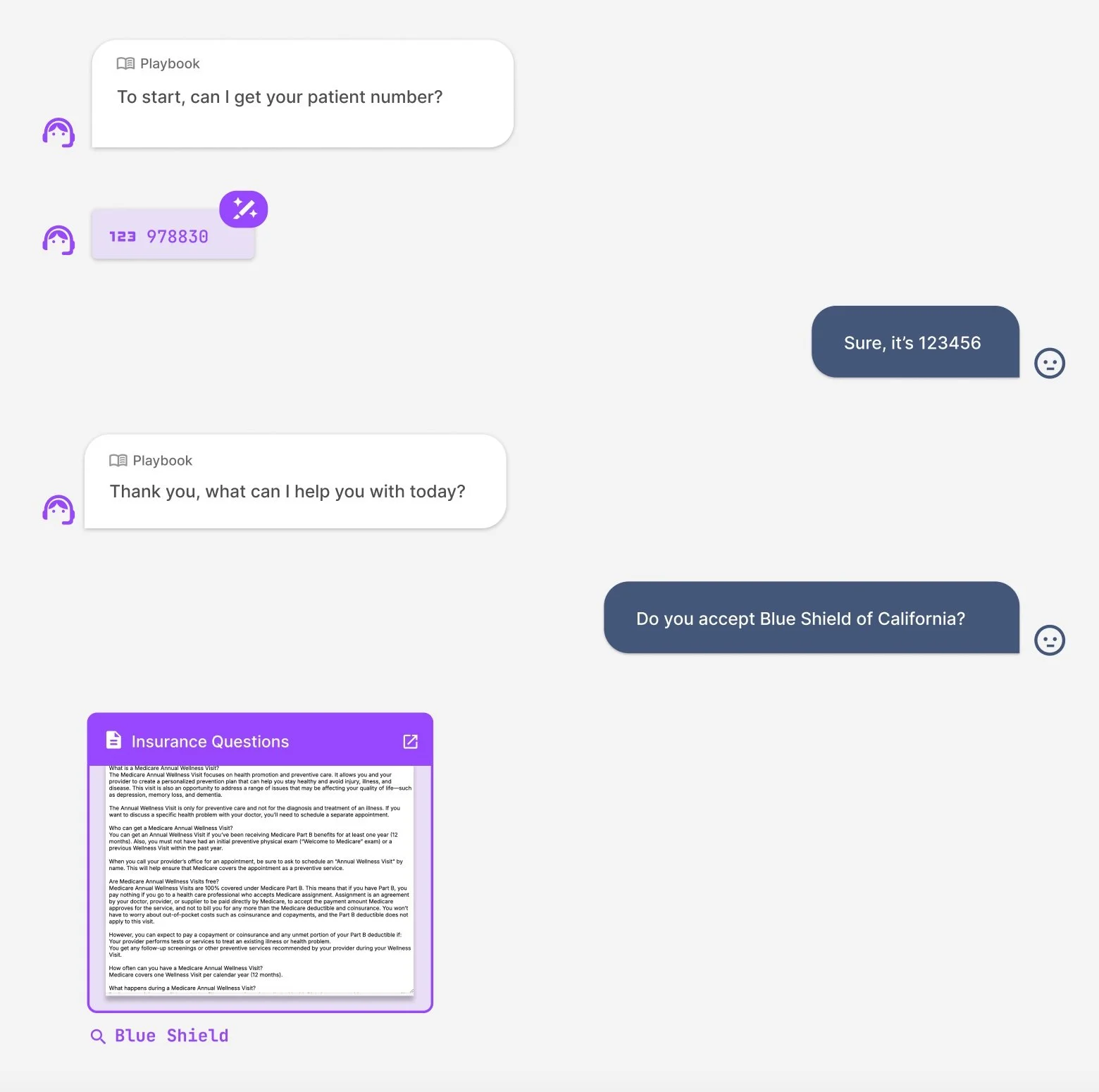
Knowledge bases allow users to provide domain knowledge and context through plaintext documents or external URLs.
usability sessions
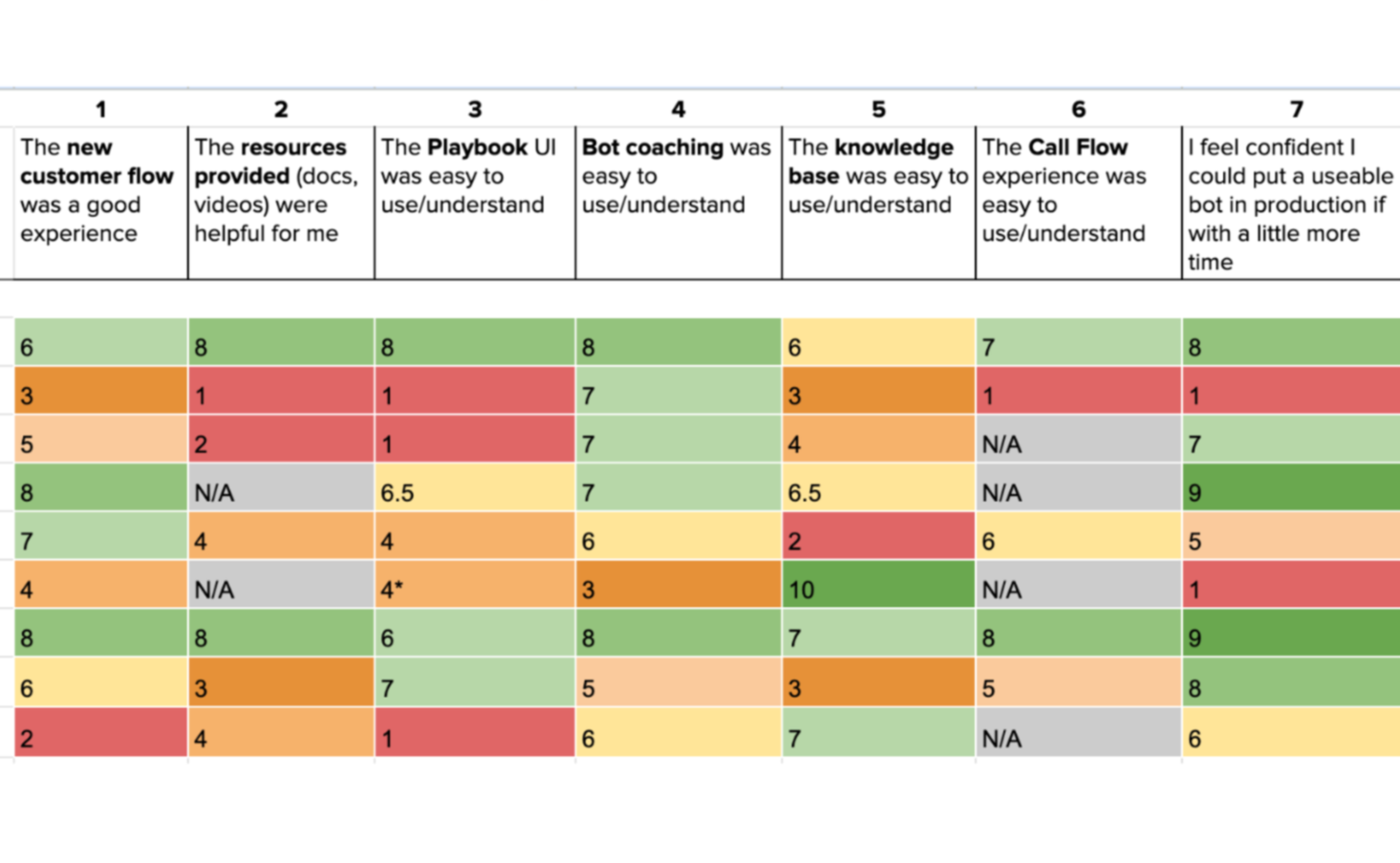
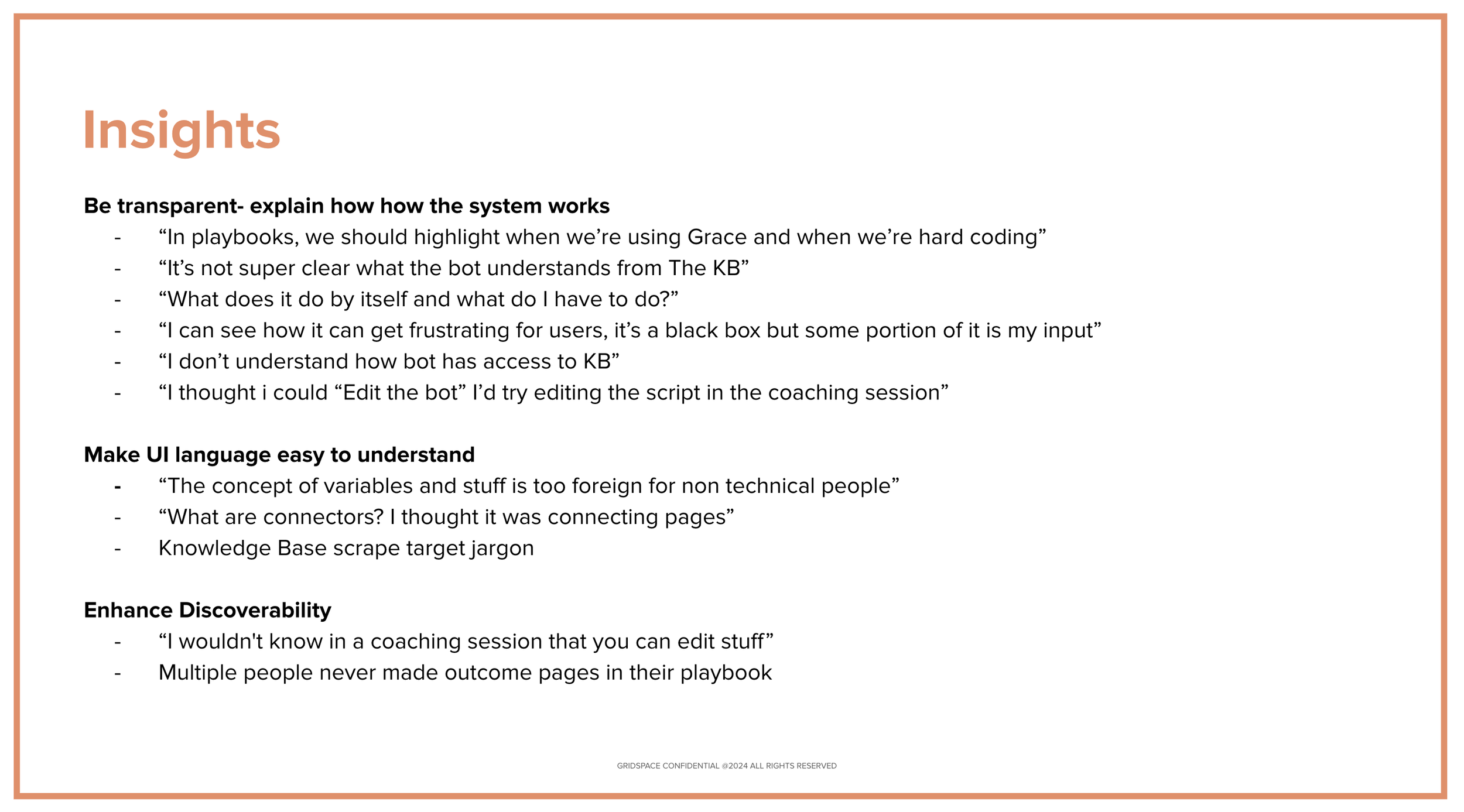
I ran internal usability sessions in which participants completed guided tasks while I observed how they used the agent tools. A brief survey captured additional feedback and helped identify common themes.
The findings informed a set of UX principles that guided improvements to agent creation and testing workflows.