Projects / Operations
Operations
I’ve designed the operational tools that power Gridspace’s voice platform, evolving the contact center foundation to support the execution and management of AI voice agents at scale.
conversation view
Monitoring voice interactions
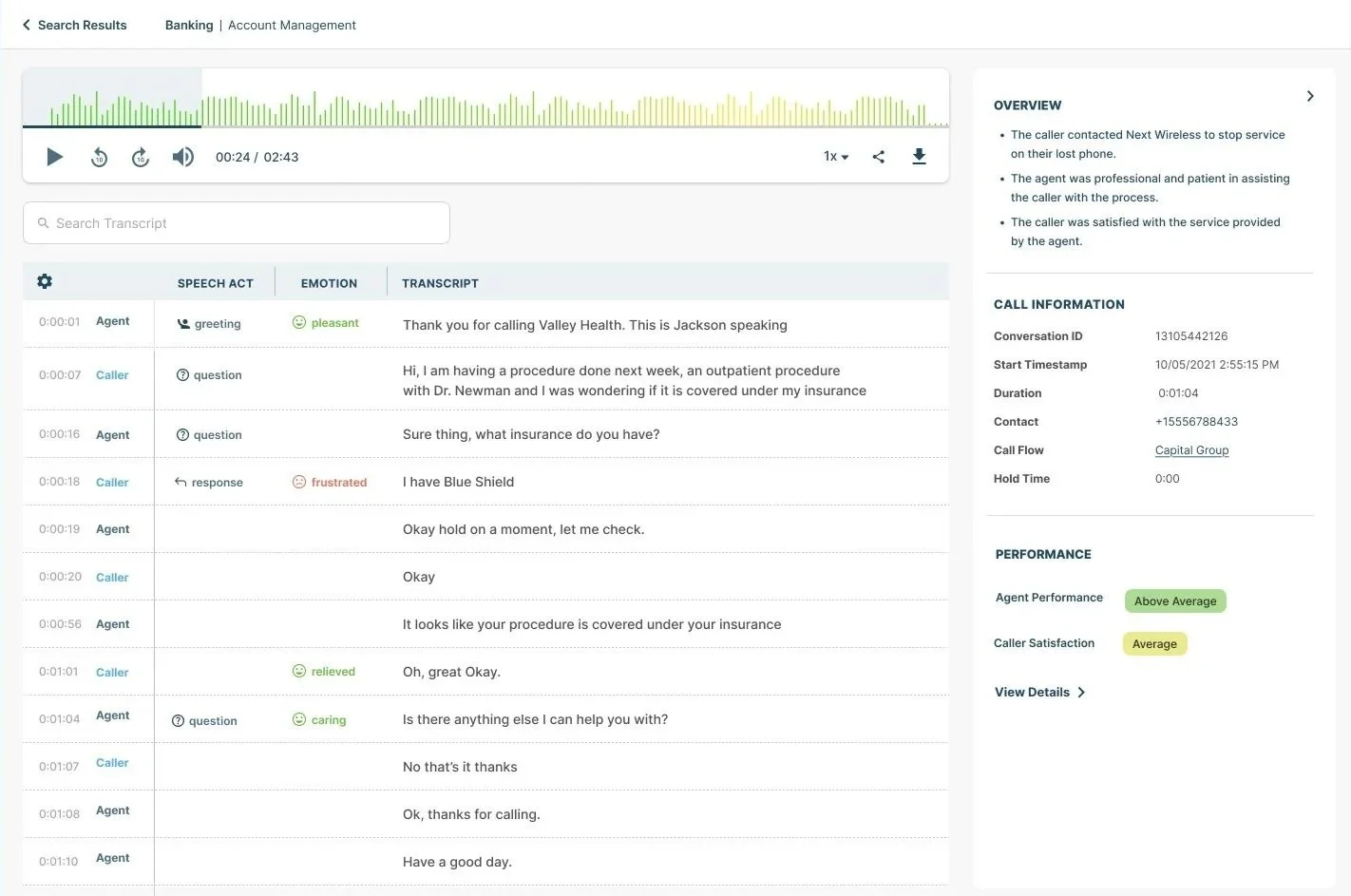
Problem: This was a redesign of the Conversation View, the screen where supervisors, QA specialists, and analysts at contact centers like USAA reviewed calls. They needed to find what mattered in a conversation quickly, at high call volumes. Engineering wanted to surface a large set of speech metrics, which risked cluttering the view and burying the conversation itself.
What I designed: A monitoring view centered on the call transcript, with annotations, a configurable evaluation form, and automated scoring of AI or human agent performance. When many users preferred the simpler transcript view, I designed refinements to keep the speech metrics unobtrusive, like collapsible columns. They weren’t implemented before the team moved on, but users could switch back to the original layout.
Integrations Library
Connecting External Systems
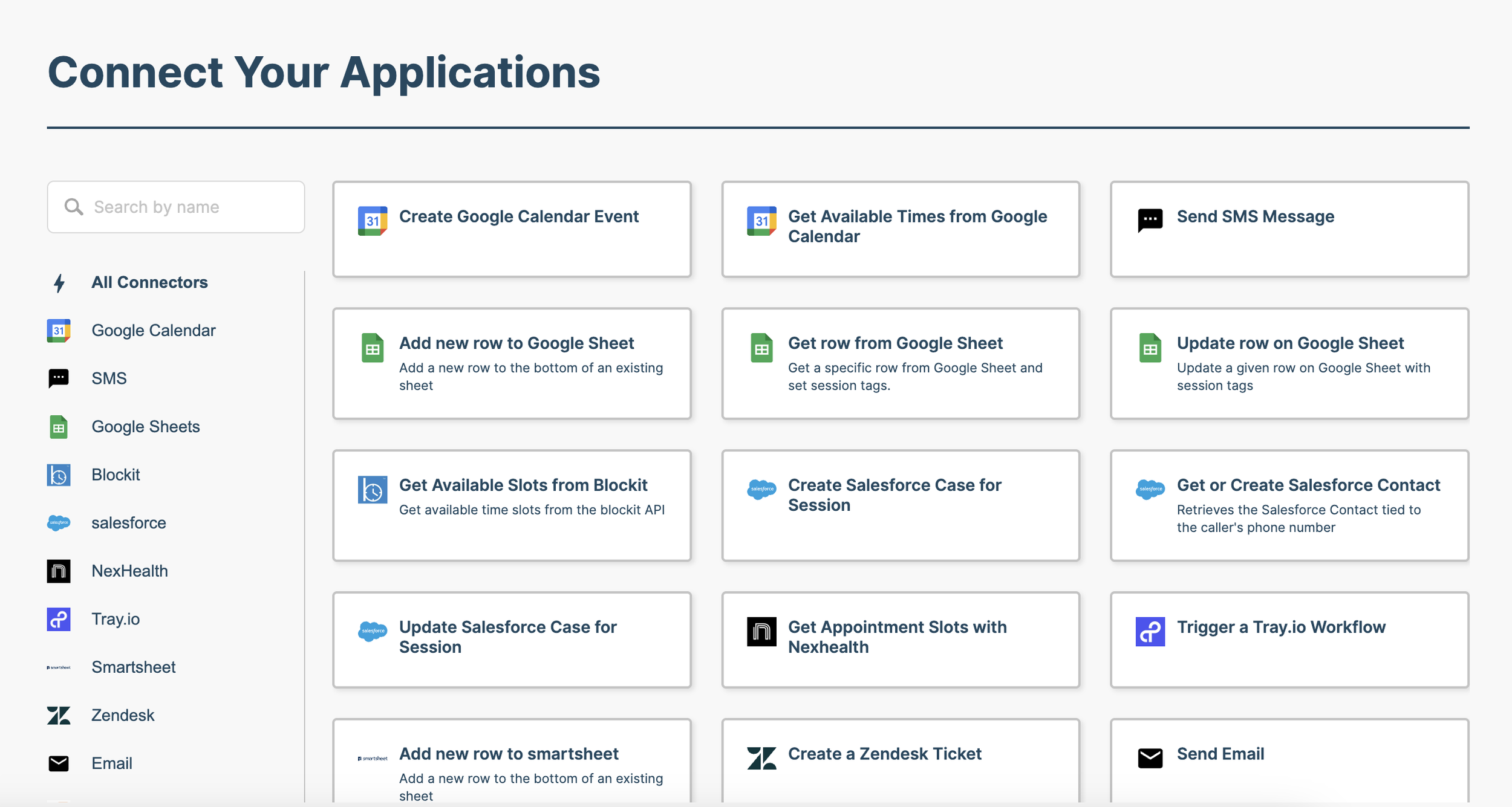
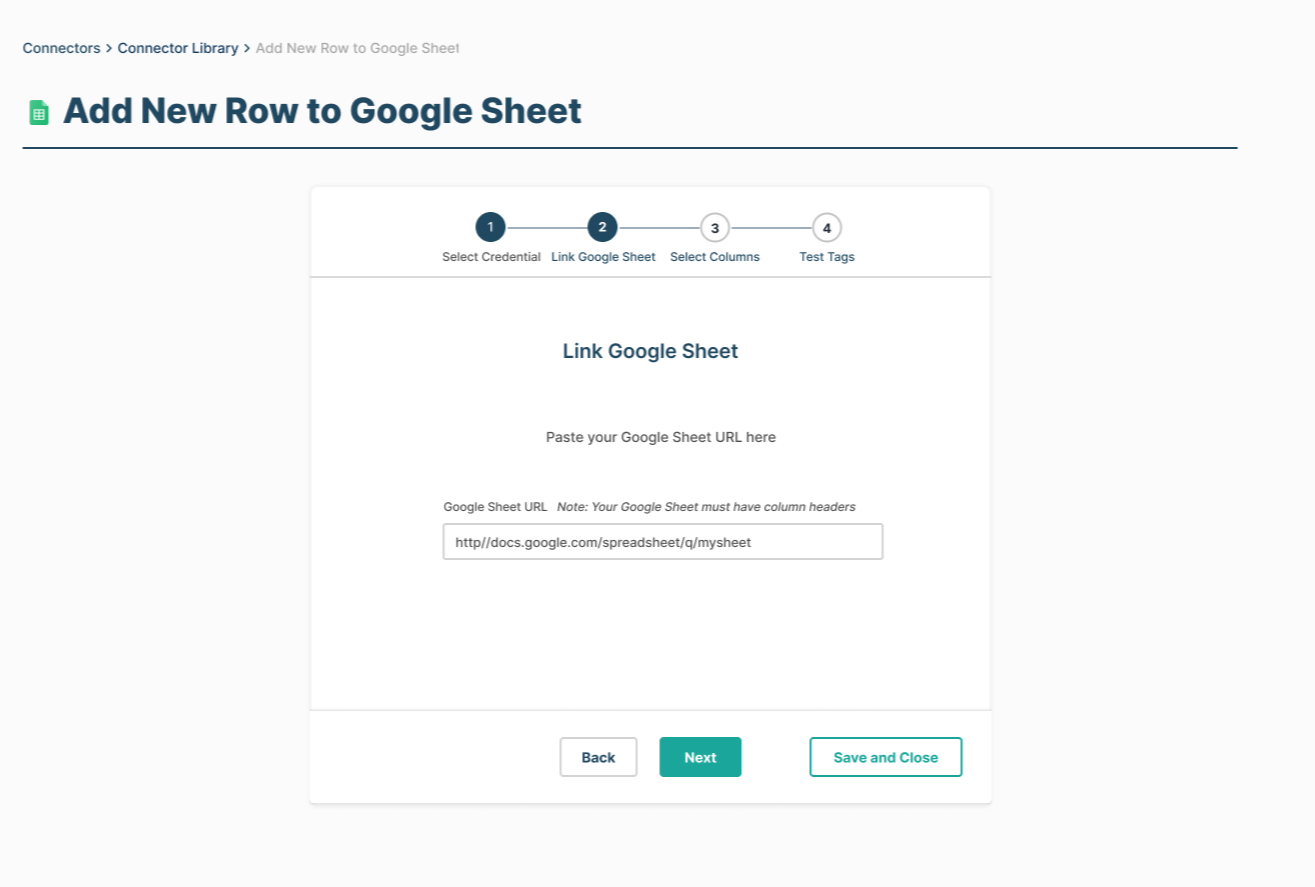
Problem: Integrations were set up through screens full of technical form fields and jargon, so customers struggled to configure common ones, like Google Sheets, on their own and needed our help.
What I designed: this was handed to me as a screen update, but I saw a bigger opportunity. I redesigned it as a visual library that made integrations easy to find, and added a step-by-step setup wizard for the ones customers found hardest.
Call Campaigns
Executing outbound campaigns
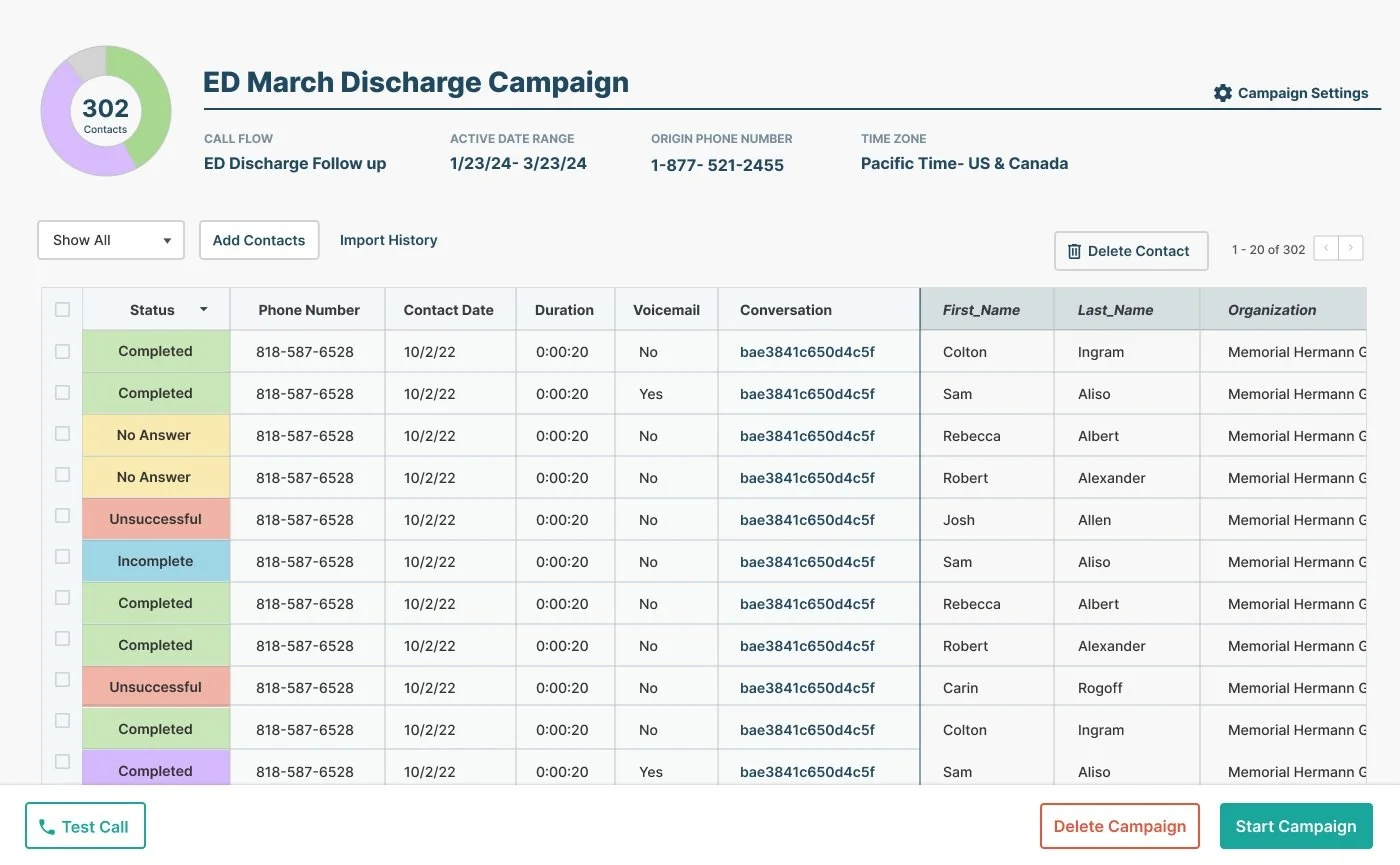
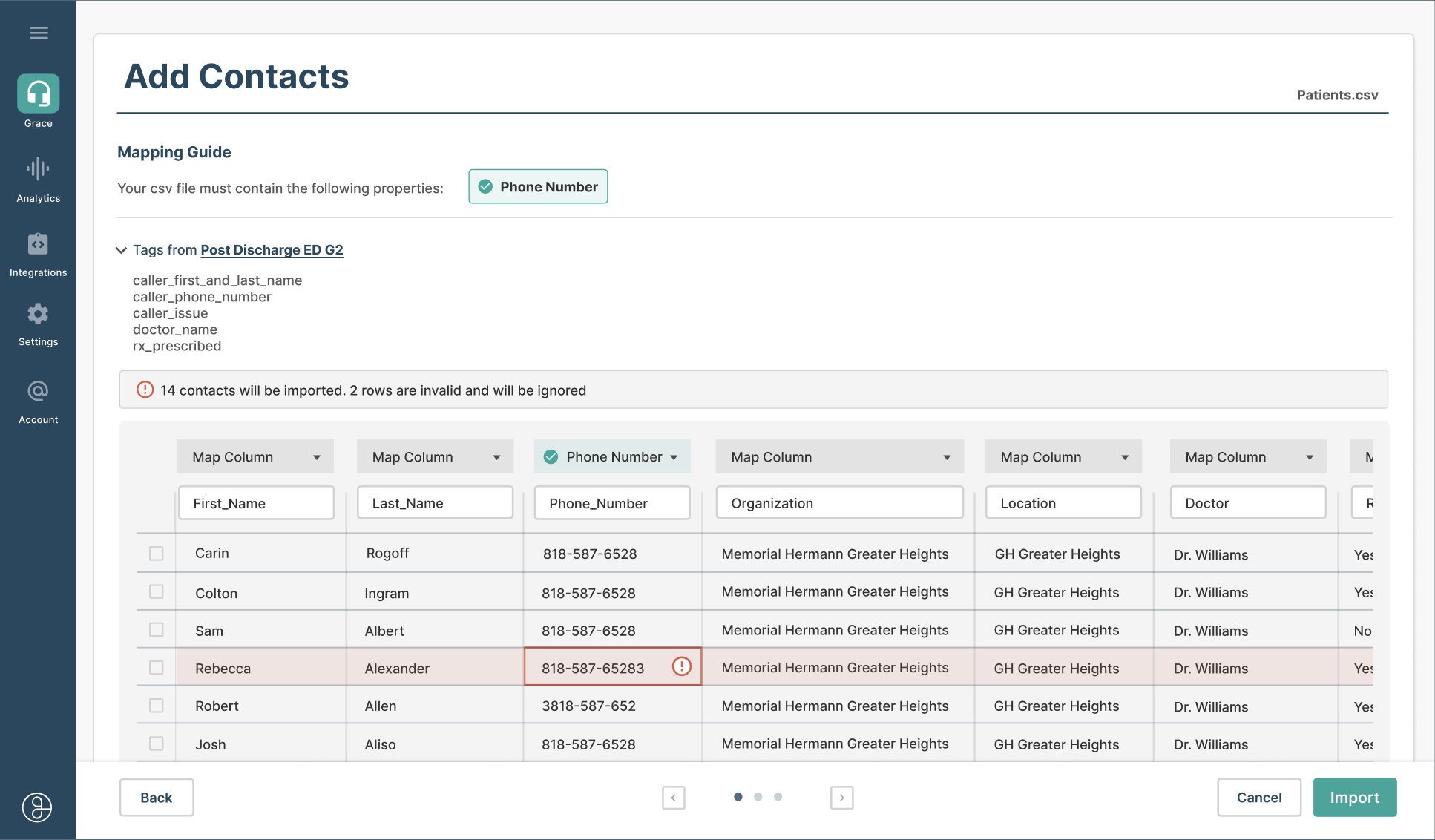
Problem: Customers wanted to use AI voice agents for outbound calls, like appointment reminders or surveys, but had no way to run and track those campaigns in one place.
What I designed: an autodialer for managing outbound campaigns, shaped by customer requirements for the call data they needed to track.